What is melamine?
Melamine (2,4,6-triamino-1,3,5-triazine) is a nitrogen-rich chemical commonly used to produce melamine resin, a synthetic heat-tolerant polymer. Melamine and its related compounds, for example cyanuric acid, are not permitted to be found in any pet and human food products. Usually, melamine is added into food products to increase the product's measurable protein contents. Melamine is an organic base chemical commonly form in the form of white crystals or powder which when consumed, accumulates in the body and forms stones in the kidney. The formation of kidney stones damages the kidneys and cause symptoms such as bloody urine (hematuria) and kidney failure when blockage of the kidneys occurs. Not only does this affect the urinary system, melamine has also shown to have carcinogenic effects when administered to animals. However, inadequate evidences to support that it has the same effects on humans.
 |
| Chemical formula of melamine |
Molecular formula: C3H6N6
Molar mass: 126.12 g/mol
Solubility: 3.240 g/L
Melting temperature: 345oC
Boiling temperature: Sublimes
Acceptable consumption:
0.2g/kg of body mass
Lethal dose: 3 g/kg of body mass
 |
| Chemical formula of cyanuric acid, a chemically related compound to melamine |
 |
| Physical appearance of melamine |
In 2008, there was a tragic milk scandal involving the act of adulteration of dairy products, specifically infant formulas and milk made by dishonest China production companies, which resulted in kidney stones and renal failure in many young children. This incident affected about 300,000 people, and claimed the lives of many infants. Melamine was added to the milk formulas to boost the level of proteins as milk was diluted to increase its volume, as well as to reduce cost.
Thus, detection methods with high selectivity and sensitivity for melamine is essential in ensuring the safety of dairy and other food products, in order to prevent such tragic incidents from recurring as well as preventing the loss of lives from any melamine contamination.

Thus, detection methods with high selectivity and sensitivity for melamine is essential in ensuring the safety of dairy and other food products, in order to prevent such tragic incidents from recurring as well as preventing the loss of lives from any melamine contamination.
Current available methods to detect melamine:
Currently, there are a few analytical methods to detect the presence of melamine in food products. There are both qualitative and quantitative methods for detection.
These methods include:
- High Performance Liquid Chromatography (HPLC)
HPLC is a highly improved form of column chromatography. Instead of having the solvent to drip through the column by gravity, the solvent (mobile phase) is forced through the column at high pressures. Stationary phase can interact with the mobile phase and the compounds it contains due to a large surface area of the stationary phase. This allows better separation of the components in the sample.
- Mass spectrometery
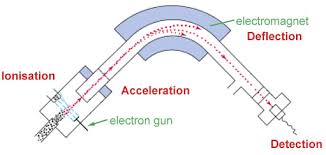
A mass spectrometer generates multiple ions from the sample under investigation, it then separates them according to their specific mass-to-charge ratio (m/z), and then records the relative abundance of each ion type. Results are displayed as spectra of the relative abundance of detected ions as a function of the mass-to-charge ratio. The atoms or molecules in the sample can be identified by correlating known masses to the identified masses or through a characteristic fragmentation pattern.

- ELISA
ELISA is a test that uses antibodies and color change to identify a substance in a sample. Performing an ELISA involves at least one antibody with specificity for a particular antigen. The sample with an unknown amount of antigen is immobilized on a solid support (usually a polystyrene microtiter plate) either non-specifically or specifically. After the antigen is immobilized, the secondary antibody is added, forming a complex with the antigen. The secondary antibody is usually covalently linked to an enzyme. After that, an enzymatic substrate is added to produce a visible signal, which indicates the quantity of antigen in the sample.
Gold nanoparticeles method is based on the principle that there is a strong attraction between the exocyclic amine groups of

The principle behind NMR is that if an external magnetic field is applied to the sample, an energy transfer within the nuclei of the compound is possible between the base energy to a higher energy level (generally a single energy gap). The energy transfer takes place at a wavelength that corresponds to radio frequencies and energy is emitted at the same frequency when the energy returns to its base level. The signal that matches this transfer is measured in many ways and processed in order to yield an NMR spectrum for the target nuclei of the compound tested.
- Usage of gold nanoparticles

Gold nanoparticeles method is based on the principle that there is a strong attraction between the exocyclic amine groups of melamine and surface-bound AuCl4−/AuCl2− ions on bare gold nanoparticles prepared by the borohydride reduction method. This method is rather simple to carry out without further modification of gold nanoparticles and complicated pre-treatment/chemical derivatization of samples. The detection limit of the method is 2.0 × 10⁻⁷ g L−1
- Nuclear magnetic resonance spectrocopy
The principle behind NMR is that if an external magnetic field is applied to the sample, an energy transfer within the nuclei of the compound is possible between the base energy to a higher energy level (generally a single energy gap). The energy transfer takes place at a wavelength that corresponds to radio frequencies and energy is emitted at the same frequency when the energy returns to its base level. The signal that matches this transfer is measured in many ways and processed in order to yield an NMR spectrum for the target nuclei of the compound tested.
Methods and Materials
In this method, melamine is separated on a C8 or C18 column using an ion pair buffer (mixture of citric acid and sodium 1-octane sulfonate) and acetonitrile mobile phase. This method was preferred as it makes use of the strong adsorbance of melamine under acidic conditions. Also HPLC has a relatively low analysis time, has high resolution, and has high sensitivity and accuracy, therefore, HPLC was chosen as the method to determine the presence of melamine in food products.
Equipment
UltiMate 3000 HPLC system with UV detection:
- HPG 3400A pump
- WPS 3000TSL autosampler
- TCC-3000 thermostated column compartment
- VWD-3400 UV-vis detector
Kudos SK3200LH ultrasonic generator
Kudos Ultrasonic Instrumental Co., Shanghai
China Mettler Toledo AL-204 Electoral o balance
China Anke TGL-16B centrifuge
China IKA MS1 Minishaker
Strata -x-c SCX SPE column
SE-506 Nitrogen Purge Instrument,Shine Technology, Beijing,China.
Chromatographic conditions
Guard Column:
- Acclaim 120 C18, 5um, 4.3 x 10mm, P/N 059446, with guard column holder, P/N 59526
Analytical Column:
- Acclaim 120 C18, 5um, 4.6 x 250mm, P/N 059149
Mobile Phase:
- Buffer (Contains 2.10g citric acid and 2.16g sodium 1-octane sulfonate in 980ml water, pH value adjusted to 3.0 with 1M NaOH solution, filled to mark of 1L volumetric flask with water) - Acetonitrile (92:8, v/v)
Column Temperature:
- 40 degree celsius
Flow Rate:
- 1.0ml/min
Inj. volume:
- 20ul
UV Detection:
- Absorbance at 240nm
Reagents and Standards
- Water, from Milli-Q Gradient A10
- Methanol, HPLC grade, Fisher
- Acetonitrile, HPLC grade, Fisher
- Trichloroacetic acid, analytical grade, SCRC, China
- Citric acid, analytical grade SCRC, China
- Sodium 1-octane sulfonate (98%), Baker Analyzed @ HPLC Reagent, USA
- Melamine (99%), HPLC grade, Fluka
- Nitrogen (99.999%), Lumin Gas Works, Shanghai,China
- Ammonia solution (25%-28%), analytical grade, SCRC, China
Preparation of Standards
- Stock Standard Solution: Accurately weigh 100mg of melamine and dissolver in a 100ml volumetric flask with aqueous methanol (50% v/v). Final concentration of melamine is 1000ug/ml.
- Working Standard Solutions: Prepare 7 working standard solutions for calibration by adding defined volumes of the stock standard solution and dilute them with mobile phase. Final concentration of melamine in each working standard solutions should be 0.2, 0.5, 2.0, 20, 25, 50 and 100ug/ml, respectively.
Sample Preparation:
- Sample Extraction
Weigh and add 2g dried sample to a 50 ml centrifuge tube and add 15ml aqueous trichloroacetic acid (1%, v/v) and 5ml acetonitrile. Mix the components together by vortexing for 1 min and transfer to an ultrasonic bath for 30 min, and then shake for 10 min. Centrifuge for 10 min at 10,000 rpm and transfer supernatant to a 25ml volumetric flask while passing through filter paper and add 1% aqueous trichloroacetic acid to the mark.
Melamine separated on a C18 column using a mixture of citric acid and sodium 1-octane sulfonate as buffer.
Acetonitrile was used as the mobile phase in this analysis.
Method:
- Cleaning Sample Extract on an SCX SPE Column
Before use, SPE column should be activated by passing 3ml Acetonitrile and 5ml water in turn. Next, mix 5ml of sample extract with 5ml water and move them to the activated SCX SPE column. Wash the SPE column with 3 ml methanol and 3 ml water, and then elute with 6ml of methanol solution (Solution is from a mixture of 5ml ammonia solution and 95ml methanol). Dry the collected eluent with Nitrogen at 50 degree celsius and dissolve the residue in 1ml mobile phase. Vortex the solution for 1ml. Prior to injection, filter the solution through a 0.2 um filer.
- Spiked Milk Powder Samples
Risk assessment:
Chemicals/ Reagents
|
Potential risks to
remember
|
Use of this chemical
|
Source of this reagent
|
How will you protect yourself?
|
First aid
|
Methanol
|
1) Toxic if inhaled. May cause respiratory tract irritation.
2)Toxic if swallowed.
3)May cause eye irritation.
|
Used as a solvent.
|
Chemically synthesized. (Prepared by reacting carbon monoxide and
hydrogen)
|
Handle with gloves and lab coat.
Avoid eye, mouth and skin contact.
|
Skin-Wash thoroughly with soap and water.
Eye-Flush eyes with water.
If swallowed, rinse mouth with water.
|
Acetonitrile
|
1) Highly flammable (Upper limit: 16% V, Lower limit 4.4% V)
2) May cause allergic skin reaction if absorbed through skin. May
cause skin irritation.
3) May be harmful if swallowed.
|
Used as a mobile phase in Reverse Phase Chromatography.
|
Chemically synthesized.
Byproduct from manufacture of acrylonitrile or by dehydration of
acetamide.
|
Handle with gloves, lab coat and mask.
Avoid eye, mouth and skin contact
|
Skin-Wash thoroughly with soap and water for at least 15 minutes.
Eye-Flush eyes with water for at least 15 minutes.
If swallowed, rinse mouth with water
|
Trichloroacetic acid
|
1) Causes severe skin burns and eye damage.
2) May be irritating to mucous membranes and upper respiratory tract.
3) High level of toxicity
|
Used to precipitate protein and to determine protein concentration by
quantitative precipitation.
|
Chemically synthesized.
Produced from the reaction of chlorine with acetic acid.
|
Handle with gloves and lab coat.
Avoid eye, mouth and skin contact.
|
Skin-Wash thoroughly with soap and water.
Eye If in contact with eye, remove any contact lens and continue
rinsing eye.
If swallowed, rinse mouth with water.
|
Citric acid
|
1) May cause serious eye irritation.
2) May be harmful if absorbed through skin.
3) May be harmful if inhaled.
4) May cause respiratory tract irritation.
|
Used commonly as acidifier, flavoring and as a chelating agent
|
Produced through fermentation of glucose Aspergillus niger.
|
Handle with gloves and lab coat.
Avoid eye, mouth and skin contact.
|
Skin-Wash thoroughly with soap and water.
Eye-Flush eyes with water.
If swallowed, rinse mouth with water.
|
Sodium 1-octane sulfonate
|
1) May be harmful if swallowed
2) May be harmful if absorbed through skin
3) Causes severe eye irritation.
|
Used together with citric acid as a buffer for the separation of
Melamine on a C18 column
|
Chemically synthesized.
|
Handle with gloves and lab coat.
Avoid eye, mouth and skin contact.
|
Skin-Wash thoroughly after handling reagent.
Eye-Flush eyes with water and remove any contact lenses, if possible.
If swallowed, rinse mouth with water, do not induce vomiting.
|
Melamine
|
1) May be harmful if swallowed.
2) May cause eye irritation if come in contact with naked eye.
|
Used to produce a durable thermosetting plastic (melamine resin) by
combining with formaldehyde.
|
Decompose urea into cyanic acid and ammonia in an endothermic
reaction and polymerize cyanic acid to form cyanuric acid which condenses
with the liberated ammonia to form melamine.
|
Handle with gloves and lab coat.
Avoid eye, mouth and skin contact.
|
Skin-Wash thoroughly after handling reagent.
Eye-Flush eyes with water and remove any contact lenses, if possible.
If swallowed, rinse mouth with water, do not induce vomiting.
|
Nitrogen
|
1) May explode if heated when gas is in steel tank under high
pressure.
2) May be harmful if inhaled and cause respiratory tract irritation.
|
Used as a drying agent.
|
Produced by fractional distillation of liquid air.
|
Handle with gloves and lab coat.
Avoid eye, mouth and skin contact.
|
Skin-Wash thoroughly after handling reagent.
Eye-Flush eyes with water and remove any contact lenses, if possible.
If swallowed, rinse mouth with water, do not induce vomiting.
|
Ammonia
|
1) Harmful if swallowed.
2) Flammable.
3) May cause eye irritation or eye burns if in contact with naked
eye.
|
Used as an antimicrobial agent for food products or as a fertilizer
or cleaning agent.(Household ammonia)
|
Produced through the reaction of a base and ammonium salt.
(Base + ammonium salt à
salt + ammonia gas + water)
|
Handle with gloves and lab coat.
Avoid eye, mouth and skin contact.
|
Skin-Wash thoroughly after handling reagent.
Eye-Flush eyes with water and remove any contact lenses, if possible.
If swallowed, rinse mouth with water, do not induce vomiting.
|
|
Potential
Hazard
|
Who is at
risk?
|
Risk
|
Preventive
Measures
|
|
Using of reagents.
|
Person using the reagent
|
Reagents might cause serious skin or eye irritations
when come directly in contact.
|
Handle with protective gloves and safety goggles.
Wear a lab coat.
Read MSDS or do research before using any unfamiliar
reagents.
|
|
Walking in the lab might cause spillage of reagents.
|
Anyone who is in the lab.
|
Reagents might cause serious skin or eye irritations
when come directly in contact.
|
Wear protective gloves, safety goggles and a lab
coat when in lab.
|
|
Current leakage
|
Anyone who is in the lab.
|
Might cause electrical shock, initiation of a fire
or explosion.
|
Always be alert and check for faulty insulation and
carry out regular maintenance.
Wear protective gloves, safety goggles and a lab
coat when in lab.
|
|
Toxic fumes
|
Anyone who is in the lab.
|
Might cause harm to the people exposed to the fumes
|
Always be alert and have proper ventilation.
|
|
Wet floors
|
Anyone who is in the lab.
|
Might cause people in the lab to slip. Extremely
dangerous to anyone carrying toxic or corrosive reagents.
|
Always dry up any spillage or wet areas immediately
or as soon as possible.
|
Analytical results:
- Detection limit of experiment:
 |
| Left: Results from the HPLC done on the 5 milk samples Right: Calibration graph of the results |
Calibration linearity for melamine was investigated by making three replicate injections of each standard
prepared at seven different concentrations. The external standard method was used to establish the calibration curve and to quantify melamine in samples. As shown in the figure above, excellent linearity was achieved throughout the range from 0.2 to 100 µg/mL. The linearity equation of melamine is as follows with the curve forced the through origin.
A = 1.2788 c
Where, A stands peak area, and c stands melamine concentration (µg/mL). The correlation coefficient (r) is
0.999961.
Method detection limit (MDL) of melamine was calculated by using S/N = 3, where S = signal, N = noise.
The calculated value of MDL is 0.17 µg/mL.
The %RSD for the retention times was 0.143%.
- Sample analysis results:

Five milk powder samples (1–5) obtained from a manufacturer were analyzed. Melamine was found in samples #1 through #4. An amount of melamine less than the Method Detection Limit was detected (0.12 µg/mL) in sample 5 and therefore can not be reliably identified as melamine.
Discussion and conclusion:
From the results obtained in the HPLC done in the experiment, it is shown that the method performance was very high (correlation value = 0.999961, %RSD = 0.143%) and the results were very precise. In conclusion, although the international law stated that there should only be a maximum of 2.5mg/kg of melamine in any food products, milk samples from China has continued to flout the law byconsiderably exceeding the maximum melamine limit in some of their milk products. Melamine is highly toxic and is lethal at high concentrations. With the presence of this toxin in food products, the population of people who consume the contaminated products are all in risk of getting ill from them.


No comments:
Post a Comment